
Glaucoma
Glaucoma is an eye disease that progressively damages the optic nerve — the “cable” that carries visual information from the eye to the brain.
This damage is most often linked to excessively high pressure inside the eye, known as intraocular pressure.
The major problem with glaucoma is that it progresses slowly and painlessly, often with no symptoms at first.
How does eye pressure work?
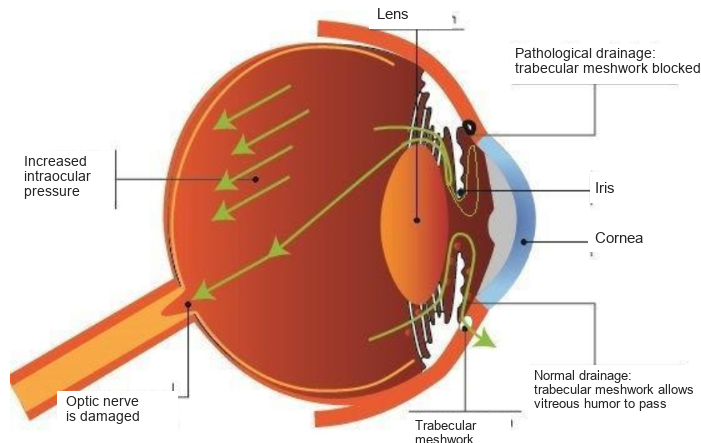
Inside the eye circulates a transparent fluid called the aqueous humor. This fluid is:
- produced continuously,
- then drained through a drainage system.
Normal functioning of the eye:
- The aqueous humor is produced behind the iris
- It flows toward the front of the eye
- It drains through a natural filter (the trabecular meshwork)
- Normal balance: production = drainage → stable pressure → healthy optic nerve
What is glaucoma?
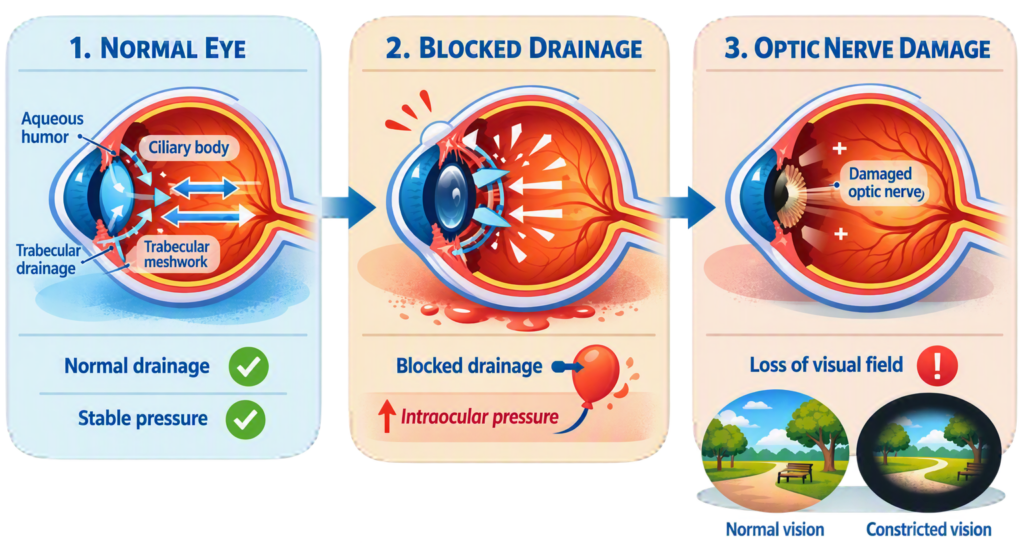
When this system malfunctions, the fluid builds up → pressure increases → this gradually compresses and damages the optic nerve. Glaucoma progressively destroys the fibers of the optic nerve, leading to a loss of visual field.
At first, central vision remains normal, but peripheral vision declines (you see less to the sides).
Then, if the disease is left untreated, the visual field narrows more and more, and this can progress to irreversible blindness.
The damage is permanent: lost vision cannot be recovered.
Learn more about glaucoma
Different types of glaucoma
1. Chronic glaucoma (the most common)
- slow, painless progression
- often discovered during a routine exam
- mainly affects adults over 40
2. Acute glaucoma
- sudden onset
- intense pain in the eye
- red eye, blurred vision, sometimes nausea
This is a medical emergency: seek immediate care.
Risk factors
Some people are at higher risk of developing glaucoma: age (especially after 40–50), family history, elevated eye pressure, significant myopia, and certain conditions such as diabetes or hypertension.
How is glaucoma screened for?
Screening is essential because the disease is silent for a long time.
An eye exam with an ophthalmologist allows for measuring intraocular pressure, examining the optic nerve, and testing the visual field.
Regular follow-up allows the disease to be detected before significant vision loss occurs.
Can glaucoma be treated?
Yes. While it cannot be fully cured, its progression can be significantly slowed.
Treatments aim to lower pressure inside the eye:
- eye drops (daily)
- laser treatment
- surgery in certain cases
The goal is to preserve remaining vision.