
Understanding the Eye
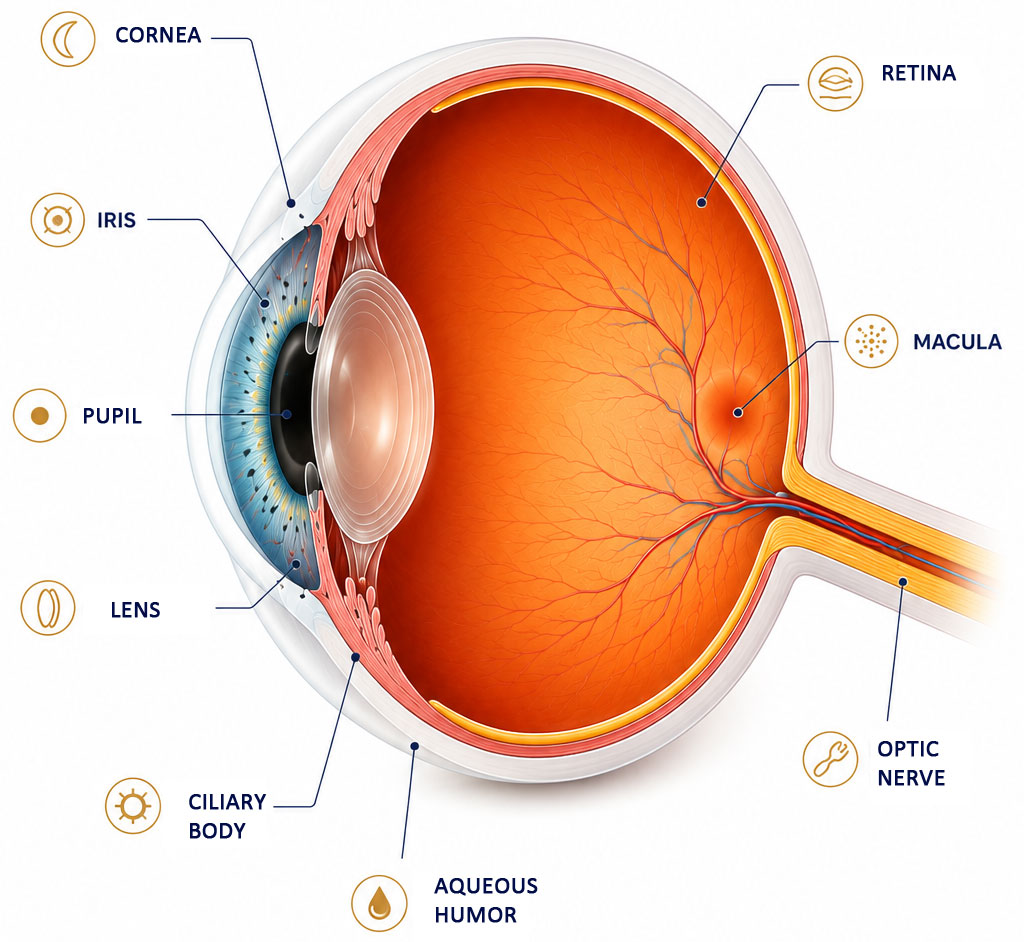
The eye is the organ of vision. It captures light, converts it into signals and sends them to the brain, which interprets them so that we can see shapes, colors, movement and distances.
Vision is a complex process involving both the eye and the brain. When any stage of this process is disrupted, vision may become blurred or painful, or gradually deteriorate, sometimes leading to blindness.
The eyeball is an almost spherical organ located within the bony socket of the face.
It is the organ that enables us to see. It is relatively small: about 2.4 centimeters (just under one inch) in length, weighing only a few grams and fitting easily in the palm of your hand.
The eyeball is made up of three main layers, which protect the eye and contribute to its proper function:
- The sclera: the tough, white outer layer that gives the eye its shape and protects it.
- The uvea: the middle layer, rich in blood vessels, which nourishes the eye and includes the iris.
- The retina: the very thin, light-sensitive inner layer that is essential for vision.
The Transparent Structures of the Eye
For light to travel through the eye and form an image, the eyeball contains several transparent structures:
- The aqueous humor: a clear fluid located at the front of the eye.
- The lens: the eye’s natural lens, which enables it to focus.
- The vitreous humor: a transparent gel that fills the back of the eye and helps maintain its shape.
The Main Parts of the Eye and Their Functions

The Cornea
The cornea is the transparent part at the front of the eye.
It acts as the eye’s first lens: it allows light to enter and directs it toward the inside of the eye. If the cornea is damaged by an infection, injury or scarring, vision may become blurred.
The Iris and Pupil
The iris is the colored part of the eye.
It controls the size of the pupil, the small black circle at the center of the eye.
- In bright light, the pupil becomes smaller.
- In the dark, it becomes larger.
This regulates the amount of light entering the eye.

The Lens
The lens is a natural lens located behind the iris. It allows the eye to focus and see clearly both near and far.
With age or as a result of certain conditions, the lens can become cloudy. This is known as a cataract, one of the leading causes of avoidable blindness.

The Retina
The retina lines the back of the eye. It detects light and converts it into nerve signals.
These signals are then sent to the brain through the optic nerve. Damage to the retina can cause significant loss of vision, which may sometimes be irreversible.

The Optic Nerve
The optic nerve connects the eye to the brain and carries visual information.
If it is damaged, as can happen with glaucoma, vision may gradually deteriorate without pain, often without the person realizing it.
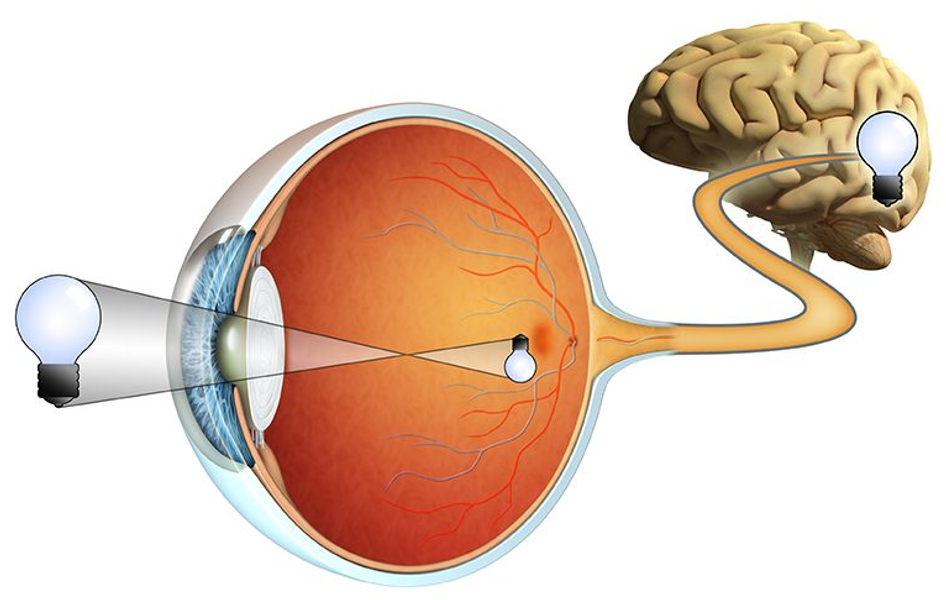
How an Image Is Formed
It passes through the pupil.
The lens adjusts the focus.
The image is formed on the retina.
The retina sends the information to the brain.
The brain interprets the image.
Learn More
Seeing Is More Than Just Looking
It is the result of the eye and the brain working together.