
Ocular fluids: when these liquids become imbalanced
The eye contains two essential fluids: the aqueous humor at the front and the vitreous humor at the back.
When functioning normally, they quietly support vision, playing a discreet but essential role in how the eye works. However, an imbalance in these fluids can lead to conditions that are sometimes subtle at first, but potentially serious.
In the eye, not everything comes down to “solid parts” like the cornea or the retina. There are also transparent fluids, called ocular humors, that play a fundamental role in vision.
There are two main humors:
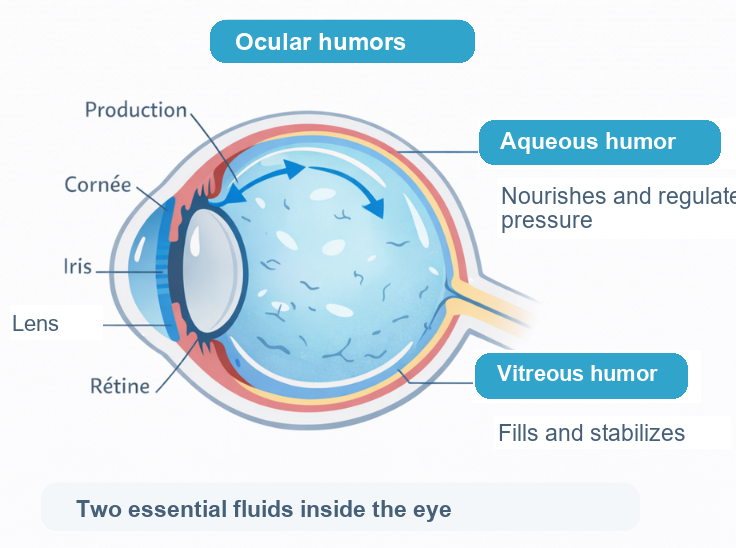
The aqueous humor: the fluid that nourishes and regulates
The aqueous humor is located at the front of the eye, between the cornea and the lens.
It has several essential functions:
- Nourishing the internal structures (cornea and lens)
- Maintaining eye pressure (intraocular pressure)
- Removing waste
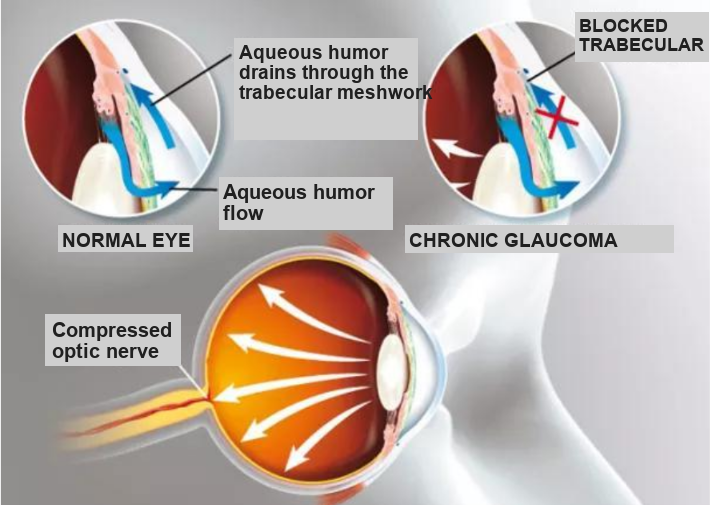
It is a fluid in constant circulation: it is produced continuously, flows through the eye, and is then drained by a drainage system. If this system malfunctions, pressure increases → this is what can lead to glaucoma.
The vitreous humor: the gel that maintains the shape of the eye
The vitreous humor fills the entire back of the eye, between the lens and the retina.
It is a transparent gel that maintains the shape of the eye, allows light to pass through to the retina, and helps stabilize the retina.
Unlike the aqueous humor, it is nearly immobile and barely renews itself.
With age, it can change → leading to the appearance of “floaters” (small spots in the field of vision).
And yet, many vision disorders can be prevented or treated if caught in time.
Disorders of the aqueous humor
These are circulation and pressure problems.
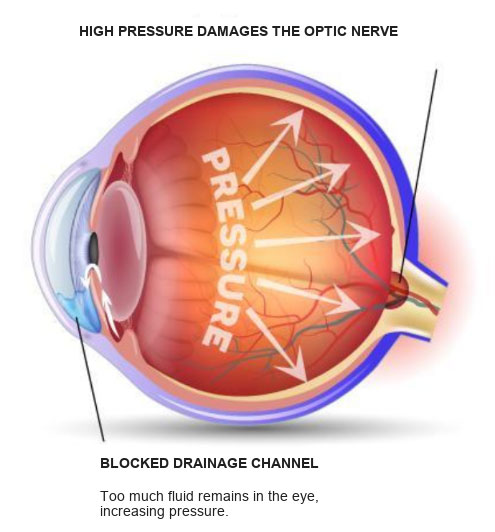
The aqueous humor is produced continuously and must be drained in a balanced way. When this mechanism is disrupted, pressure inside the eye can rise.
The main condition associated with this is glaucoma.
In this situation, the fluid drains poorly, causing intraocular pressure to increase. Over the long term, this excess pressure progressively damages the optic nerve. The disease often progresses without symptoms at first, which is why it is sometimes diagnosed late, after vision loss has already set in.
An intermediate situation can exist, called ocular hypertension, where pressure is elevated without immediate damage to the optic nerve. It requires regular monitoring, as it can progress to glaucoma.
Prevention relies mainly on screening. Regular monitoring of eye pressure — particularly after age 40 or in cases of family history — helps detect these abnormalities early.
Disorders of the vitreous humor
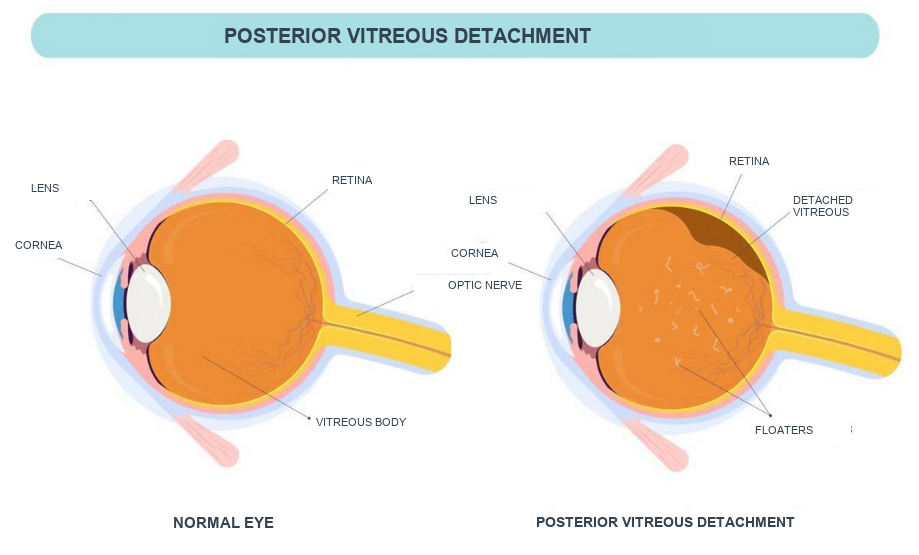
These are aging or traction-related problems.
The vitreous humor is a gel that fills the back of the eye. Unlike the aqueous humor, it barely renews itself and changes with age.
The most common manifestation of its deterioration is the appearance of floaters. These are small spots or strands perceived in the field of vision, often more visible against a light background. In most cases, this phenomenon is benign and related to the natural aging of the vitreous.
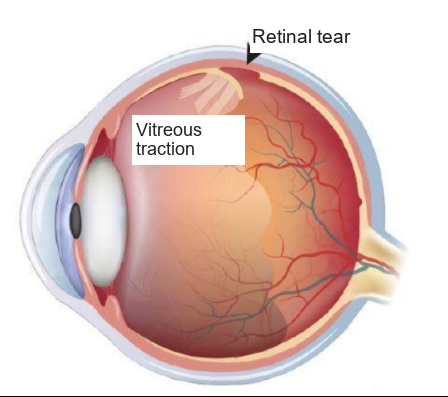
In some cases, traction exerted by the vitreous can cause a tear in the retina, or even a retinal detachment. This detachment can be accompanied by brief flashes of light. These situations are more serious and require prompt care to prevent vision loss. Warning signs to watch for include a sudden and significant increase in floaters, repeated flashes of light, or the sensation of a veil across the field of vision.
Prevention: the right habits
It’s important not to dismiss recent or unusual visual symptoms. Any rapid change in vision should prompt a consultation.
Regular ophthalmological follow-up is recommended, even without symptoms — particularly with age, in cases of significant myopia, or with a family history.
Certain treatments, especially corticosteroid-based ones, can affect eye pressure and should be used under medical supervision.