
What Is a Cataract?
A cataract is a progressive clouding of the lens, the eye’s natural lens located behind the iris. Under normal conditions, the lens is completely transparent and focuses light onto the retina to produce a clear image.
Over time, or as a result of certain factors, the lens becomes cloudy. Light can then pass through less effectively, causing increasingly blurred vision, as if looking through a veil or a fogged-up window. This progression is generally slow and painless.
What Are the Signs?
Cataracts develop gradually. The main signs include:
- reduced vision, often affecting both eyes but not necessarily to the same degree,
- a persistent feeling of blurred vision that is not corrected by glasses,
- increased glare, especially in bright sunlight or at night,
- reduced contrast sensitivity,
- colors appearing duller or less vivid.
These symptoms may develop over several months or even several years.
What Are the Causes?
The most common cause is the natural aging of the eye. This is known as age-related cataract.
Other factors can contribute to its development, including:
- certain diseases, such as diabetes,
- prolonged use of certain medications,
- eye injuries,
- significant exposure to sunlight without adequate eye protection.
What Is the Treatment?
There is no medical treatment that can make a cataract disappear.
When cataracts begin to significantly interfere with daily activities, treatment involves surgery. The procedure consists of removing the cloudy lens and replacing it with a clear artificial lens called an intraocular lens (IOL).
The procedure is quick and is usually performed as an outpatient procedure under local anesthesia. It is now very well established and is one of the most commonly performed surgical procedures.
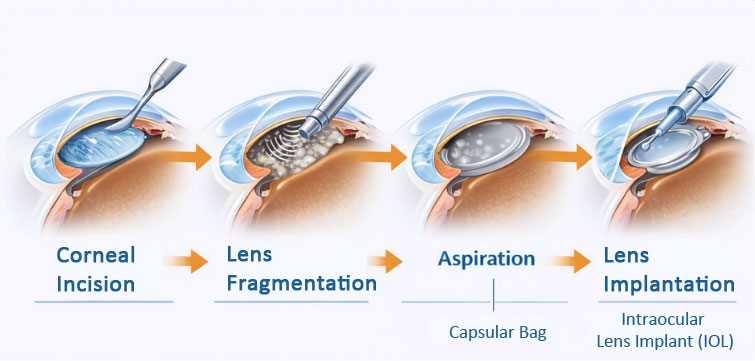
Cataract surgery
After Surgery
Vision improves within a few days. In most cases, patients regain clear and comfortable vision. Depending on their needs, they may still need glasses, particularly for reading.
Prevention and Follow-up
It is not possible to completely prevent cataracts, but certain measures can help delay their onset:
- protect your eyes from the sun by wearing appropriate sunglasses,
- monitor and maintain good control of diabetes,
- avoid smoking,
- have regular eye examinations.
Cataracts are therefore a common age-related change in the eye, but they can be treated effectively. Appropriate treatment can restore good vision and improve everyday comfort.