
Why Are Eye Diseases So Common?
In some regions, several factors increase the risk of developing eye diseases:
Limited Access to Healthcare
Exposure to Sunlight and Dust
Untreated Infections
General Health Conditions
Diabetes, high blood pressure
Lack of Early Screening
Parasites and Infectious Agents in the Environment
Waterborne parasites, viruses, etc.
Yet many vision problems can be prevented or treated when detected and managed in time.
THE EYE’S INTERNAL FLUIDS
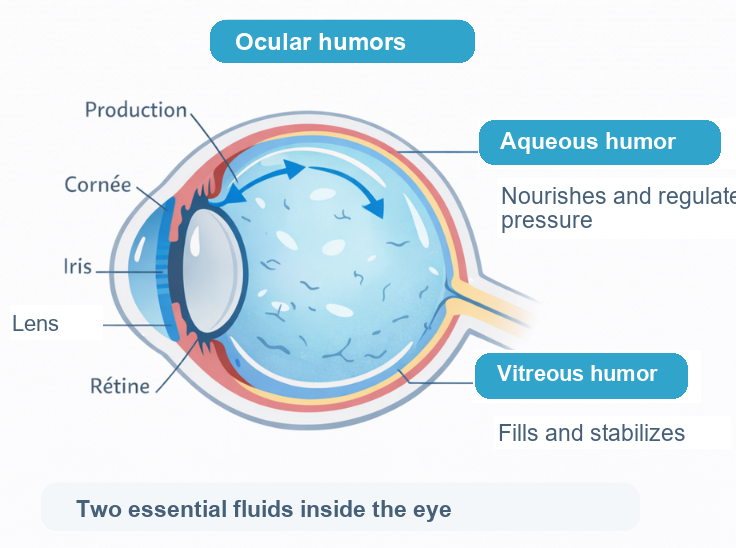
The eye contains two essential internal substances: the aqueous humor at the front of the eye and the vitreous humor at the back. Together, they contribute to the eye’s proper function and stability.
The aqueous humor nourishes the eye and helps regulate intraocular pressure. An imbalance in its production or drainage can contribute to diseases such as glaucoma.
The vitreous humor, a transparent gel that remains largely stable within the eye, helps maintain the eye’s shape but can change with age and lead to the appearance of floaters.
Understanding these internal fluids can help you recognize warning signs and protect your vision over the long term.
GLAUCOMA
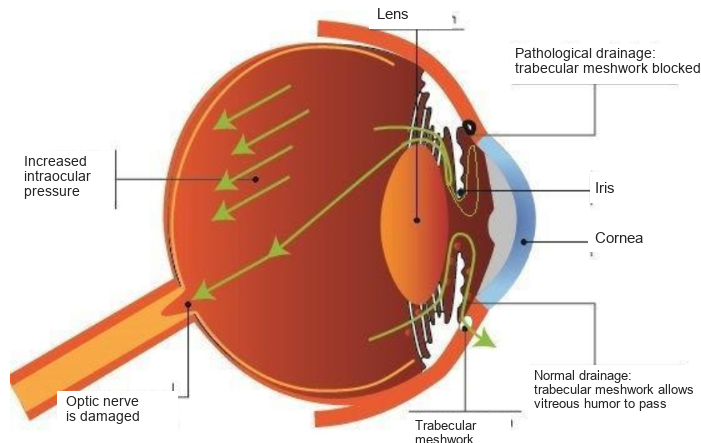
Glaucoma is a silent eye disease that progressively damages the optic nerve, often in association with increased pressure inside the eye.
With no pain or noticeable symptoms in its early stages, it can progress slowly, initially affecting peripheral vision before eventually causing irreversible vision loss.
Regular eye screening is essential to detect glaucoma early and limit its effects through appropriate treatment.
Discover how to recognize, understand and prevent glaucoma to protect your vision over the long term.
ANTERIOR SEGMENT EYE INJURIES
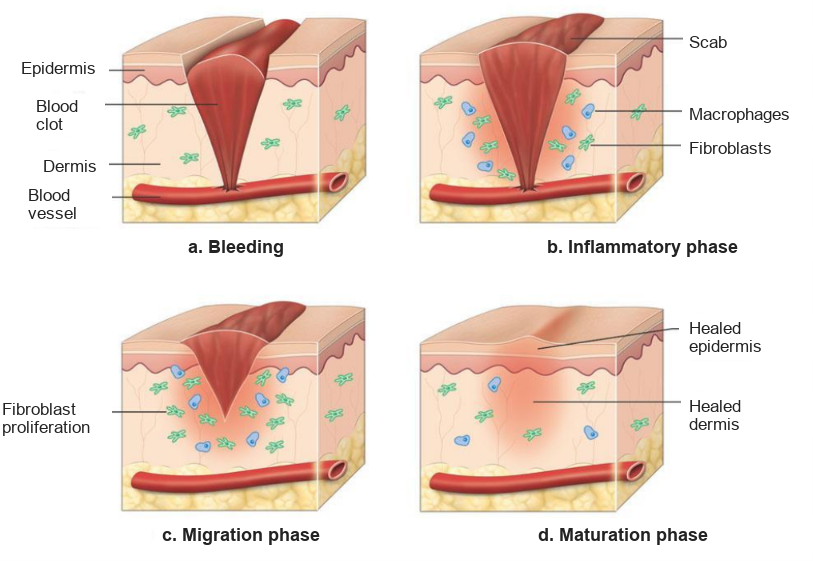
An anterior segment eye injury is an injury to the front part of the eye, ranging from a minor scratch to severe trauma that can threaten vision.
It most commonly occurs following an impact, injury from a sharp object or flying debris and may affect the cornea or deeper structures of the eye. Depending on its severity, it can cause pain, loss of vision, infection or leakage of fluid from inside the eye.
This is a medical emergency requiring prompt treatment to prevent permanent damage.
Discover the warning signs, what to do in an emergency, and how to protect your eyes effectively.
CATARACT
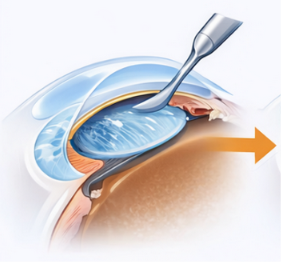
A cataract is an eye condition in which the natural lens of the eye gradually becomes cloudy, causing increasingly blurred or hazy vision, as though looking through a veil.
It usually develops slowly and without pain. Symptoms may include reduced vision, glare, faded colors and decreased contrast sensitivity.
There is no medication that can reverse a cataract. However, a safe and effective surgical procedure can replace the cloudy natural lens with an artificial intraocular lens, helping restore clear vision.
Discover how to recognize cataracts, understand how they develop and learn about the available treatment options.
RETINAL CONDITIONS
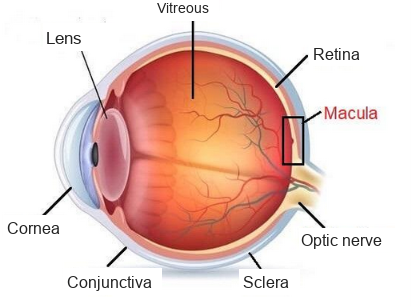
The retina is an essential layer at the back of the eye that converts light into signals that are sent to the brain, enabling us to perceive details, colors and contrasts.
The retina can be affected by a range of conditions, including macular degeneration, diabetic retinopathy and retinal detachment. These conditions can cause either sudden or progressive loss of vision.
Certain symptoms, such as spots in your vision, visual distortion, flashes of light or the sensation of a curtain or veil over your vision, should be taken seriously and require prompt medical attention.
Treatment depends on the condition and may include injections, laser treatment, surgery or regular monitoring, always with the goal of preserving vision.
Discover how to recognize retinal conditions and the treatment options available to manage them effectively.